
-

Wyślij do nas e-mail
sale@lscmagnetics.com -

Numer kontaktowy
+86 -13559234186
Wyślij do nas e-mail
sale@lscmagnetics.comNumer kontaktowy
+86 -13559234186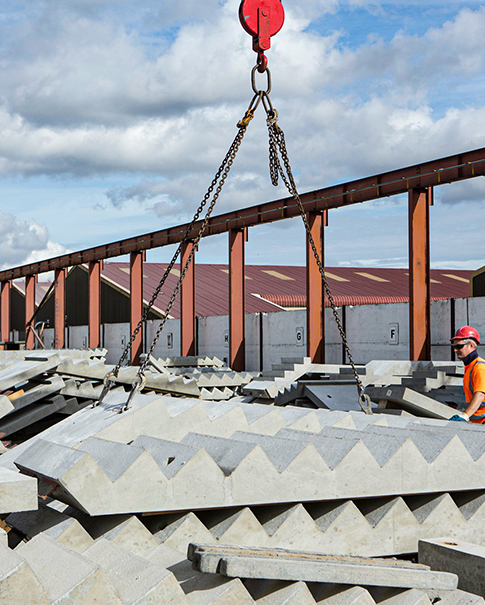

Applications of Precast Concrete Formwork: In Which Fields Is It Used?
Oct 15, 2026With the rapid development of prefabricated construction, precast concrete components (PC components) have become commonplace on construction sites. To ensure these components can be mass-produced and precisely manufactured in factories, one crucial element is the precast concrete formwork (mold). It is not only the "mother" that shapes the component but also directly determines the component's dimensional accuracy, surface quality, and production efficiency.
So, in which fields is precast concrete formwork used? Why is it becoming increasingly important? This article breaks it down for you.
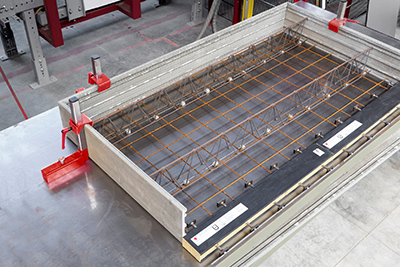
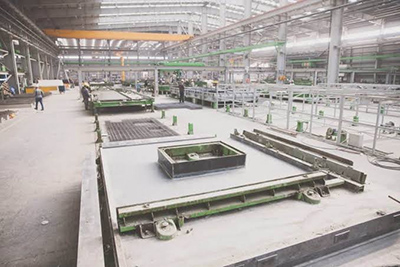
Many people simply think of precast concrete formwork as a steel "box," but this understanding is only half correct. Modern precast formwork systems include:
Fixed molds: Used for mass production of standardized components, such as composite slabs, stairs, and wall panels.
Modular/adjustable molds: Adaptable to components of various specifications by changing side molds and adjusting lengths.
Long-line formwork: Used for components produced by long-line methods, such as prestressed hollow slabs and railway sleepers.
Special-shaped molds: Serving customized products such as UHPC decorative components and artistic components.
In short, the type of mold is determined by the type of component. The precision of the mold often directly determines the precision of the component—a millimeter-level deviation in the mold can result in misaligned joints that make installation on the construction site impossible.
Residential buildings remain the largest application area for precast concrete components. In this field, the main battlegrounds for formwork include:
Precast composite floor slabs, balcony slabs, and stair sections: These have large usage volumes and relatively standardized specifications, making them the best application scenarios for fixed formwork.
Precast shear walls and interior partition walls: Sandwich-insulated exterior wall panel formwork also needs to account for the pre-embedded positioning of the insulation layer and connectors.
Integrated bathroom and integrated kitchen chassis: These place extremely high demands on the formwork's sealing and surface finish.
With the mass construction of standardized housing such as affordable housing and talent apartments, residential formwork is evolving toward "one formwork, multiple types, quick changeover, and easy adjustment."
According to industry forecasts, the demand growth rate for non-residential precast components will reach 10% in 2026, mainly driven by the mass construction of high-standard buildings such as hospitals, schools, and data centers. In the infrastructure sector, precast formwork is ubiquitous:
Bridge engineering: Precast box girders, T-beams, cap beams, and bridge decks are produced using long-line formwork or fixed formwork.
Rail transit: Shield tunnel segment molds are synonymous with "millimeter-level precision"—the segments of a section must be assembled seamlessly using high-precision molds.
Highways and municipal engineering: Crash barriers, curbs, and drainage ditch covers are largely prefabricated, resulting in low mold investment and rapid turnover.
Water and hydropower: The prefabrication rate of box culverts, manholes, cable trenches, and photovoltaic foundations continues to increase.
A noteworthy signal: in April 2026, Godrej Group, in collaboration with Deltabloc, installed India's first precast concrete crash barrier system on the Mumbai-Pune Expressway, meeting the European EN 1317 standard—the prefabrication of transportation infrastructure is accelerating globally.
You might not realize it, but a large number of components in urban underground pipe networks are prefabricated: integrated pipe gallery segments, storm and sewage inspection wells, rainwater inlets, and retaining wall blocks. This field is characterized by low individual component value but a massive total quantity, and it places high demands on the molds' wear resistance and ease of demolding.
Industrial plants and logistics warehouses prioritize large spans and rapid delivery, leading to the widespread use of prefabricated columns, prefabricated roof trusses, double-T slabs, and large roof panels. These components are large and heavy, often requiring heavy steel structure support for the molds, and equipped with hydraulic opening and closing and vibration leveling systems. Industrial and logistics facilities in the North American market are a major driver of demand for precast concrete.
If structural component molds are all about "quantity and stability," then architectural decoration molds are all about "precision and beauty." UHPC (Ultra-High Performance Concrete) components are gradually replacing traditional GRC and GRG materials and are being used in high-end residential facades, commercial complex designs, municipal landscape sculptures, and other scenarios. The domestic UHPC market has exceeded 8 billion yuan, with architectural decoration components accounting for approximately 35%, making it the fastest-growing segment. These molds often use silicone molds, resin molds, or precision steel molds, and their surface textures can replicate stone, wood grain, or even any artistic shape. Their unit price can be several times that of ordinary steel molds.
Innovation in formwork technology is opening up more application possibilities:
Intelligent Layout: Zhengzhou's Intelligent Construction Industry Development Plan clearly states that by 2030, PC component production lines will achieve "automated steel bar processing, intelligent mold layout, and intelligent temperature and humidity control during curing." Molds are transforming from "passive tools" into intelligent nodes in the production line data flow.
Digital Design: BIM models directly drive mold design, reducing the disconnect between design and production. Combined with the "EPC + Prefabrication" model, project duration can be shortened by an average of 20%–30%.
High-Performance Materials: UHPC and fiber-reinforced concrete make components thinner and stronger, also placing new demands on the rigidity, surface quality, and durability of molds.
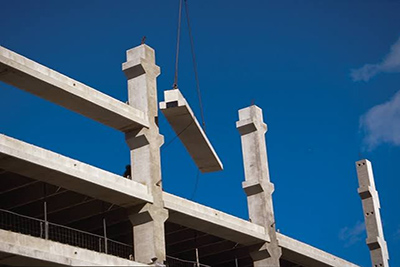
Why Choose Precast Concrete Formwork?
Eliminating the formwork removal process is a direct source of efficiency improvement. The installation and removal of traditional formwork often consume a significant proportion of labor and time in structural construction. Since precast concrete formwork does not require removal, these two processes are completely eliminated.
The quality stability brought by factory prefabrication. Components are produced in a factory environment, making it easier to control dimensional accuracy, surface flatness, and rebar positioning. Hebei Construction Engineering Group, after using factory-prefabricated steel formwork in subgrade construction, achieved straight and flat edges after demolding, resulting in a neat and uniform appearance, with all indicators superior to traditional wooden formwork.
Adaptable to complex geometries. For irregularly shaped components that are difficult to achieve with conventional wooden or steel molds, precast concrete formwork can create complex shapes in the factory using customized molds. In a large-span fish-belly roof truss project, 3D printing technology was combined with precast formwork to successfully cast a precast structure with a complex shape. The strength and stiffness of the formwork were verified by finite element simulation and on-site load tests, both meeting the requirements.
Material costs and environmental benefits. Precast concrete formwork uses concrete as the main raw material, resulting in lower costs than steel or aluminum molds of the same specifications, and it does not consume large amounts of timber like wooden molds. For formwork that is not removed, it directly becomes part of the structure, theoretically achieving 100% material utilization.
Whatsapp : +86 -13559234186
E-mail : sale@lscmagnetics.com
Tel : +86 -13559234186