
-

Wyślij do nas e-mail
sale@lscmagnetics.com -

Numer kontaktowy
+86 -13559234186
Wyślij do nas e-mail
sale@lscmagnetics.comNumer kontaktowy
+86 -13559234186

Prefabrykowane szalunki magnetyczne z betonu: rewolucja przemysłowa – od mocowania mechanicznego do inteligentnego zaciskania magnetycznego
Mar 29, 2026W tradycyjnej produkcji prefabrykatów betonowych, mocowanie deskowań od dawna opierało się na spawaniu, śrubach lub zaciskach mechanicznych. Metody te są nie tylko czasochłonne i pracochłonne, ale również uszkadzają powierzchnię drogich form stalowych. Pojawienie się deskowania magnetycznego całkowicie zmieniło ten obraz.

Systemy szalunków magnetycznych Wykorzystują silne przyciąganie magnesów trwałych z neodymu, żelaza i boru (NdFeB). Dzięki precyzyjnej konstrukcji obwodu magnetycznego, mocują one deskowanie na stalowym stole formy. Kluczowy element – magnes szalunkowy lub system deskowania magnetycznego – stał się kluczowym elementem poprawiającym wydajność produkcji w nowoczesnych zakładach prefabrykacji.
Główne elementy i zasada działania szablonów magnetycznych
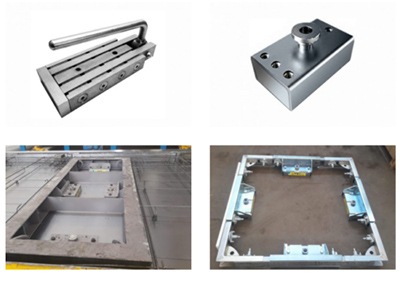
1. Pudełko na magnesy szalunkowe——Pudełko magnetyczne to najpopularniejszy element mocujący z magnesem. Składa się z następujących części:
| Część | Opis funkcjonalny | Parametry techniczne |
| Rdzeń magnetyczny NdFeB | Zapewnia trwały magnetyzm, przyciągając stalowy stół formy | Produkt energii magnetycznej: gatunek N35–N52 |
| Skorupa stalowa | Chroni rdzeń magnetyczny i zapewnia ekranowanie obwodu magnetycznego | Stal węglowa lub stal nierdzewna |
| Przycisk przełącznika | Włącza/wyłącza obwód magnetyczny, umożliwiając szybką konfigurację i demontaż | Konstrukcja typu WŁ./WYŁ. typu naciśn. |
| Interfejs adaptera | Łączy się z różnymi formami krawędziowymi, formami narożnymi lub drewnianymi szalunkami | Otwory gwintowane M8/M10 |
Zasada działania: Po naciśnięciu przycisku rdzeń magnetyczny i stalowy stół formy tworzą zamknięty obwód magnetyczny, generując pionową siłę przyciągania (od 450 kg do 3100 kg, w zależności od modelu). Użycie specjalnego łomu do podniesienia przycisku przerywa obwód magnetyczny, umożliwiając łatwe przesunięcie skrzynki magnetycznej.
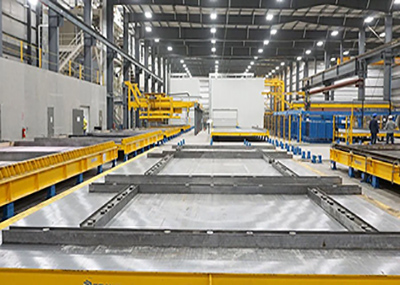
2. System szalunków bocznych magnetycznych——W przypadku standardowych linii produkcyjnych, magnetyczne szalunki boczne integrują skrzynkę magnetyczną wewnątrz profilu stalowego w kształcie litery U lub prostokątnego, tworząc zintegrowane magnetyczne szalunki boczne:
- Szalunek magnetyczny U60 – odpowiedni do produkcji płyt stropowych zespolonych i ścian dwuściennych. Skrzynka magnetyczna jest osadzona w stalowym kanale i utrzymywana na stole formy za pomocą siły przyciągania magnetycznego.
- Szalunek boczny o regulowanej wysokości – dostosowuje się do grubości elementów od 60 mm do 400 mm poprzez wymianę adaptera.
- Szalunek boczny magnetyczny z długimi pasami – dostępny w długościach 1 m, 2 m, 3 m, a nawet 3,9 m, zawierający 2–3 rdzenie magnetyczne. Idealny do szalunków ściennych o dużej powierzchni.
Kompletny proces przetwarzania i produkcji szablonów magnetycznych
Faza pierwsza: Projektowanie obwodów magnetycznych i optymalizacja symulacji
Podstawą konkurencyjności szablonów magnetycznych jest precyzja projektowania obwodów magnetycznych. Producenci muszą przeprowadzać symulację pola magnetycznego za pomocą profesjonalnego oprogramowania:
1. Modelowanie obwodu magnetycznego – określenie rozmiaru rdzenia, układu biegunów, grubości powłoki stalowej i rozkładu gęstości strumienia magnetycznego.
2. Obliczanie siły przyciągania – Oblicz wymaganą objętość rdzenia i kierunek namagnesowania na podstawie docelowej siły przyciągania (np. 2100 kg).
3. Kontrola wycieków – optymalizacja stalowej obudowy w celu skupienia strumienia magnetycznego na dolnej powierzchni roboczej i zmniejszenia wycieków bocznych.
4. Współczynnik bezpieczeństwa – zaprojektuj siłę przyciągania tak, aby była 2–3 razy większa od rzeczywistego obciążenia roboczego, uwzględniając obciążenia dynamiczne ze stołów wibracyjnych.
Faza druga: obróbka precyzyjnych części
(1) Przygotowanie rdzenia NdFeB
- Wybór materiału – należy stosować spiek neodymowo-żelazowo-borowy o gatunku N35–N52, z remanencją 1,17–1,48 T i koercją ≥12 kOe.
- Proces cięcia – cięcie drutem lub tarczą diamentową w celu osiągnięcia dokładności wymiarowej ±0,05 mm.
- Magnetyzacja – Nasycenie magnesów wzdłuż kierunku osiowego za pomocą magnetyzera impulsowego w celu utworzenia stabilnego pola magnetycznego.
- Obróbka powierzchni – potrójne galwanizowanie niklem, miedzią i niklem lub powłoka epoksydowa zapobiegająca utlenianiu i korozji.
(2) Produkcja obudów stalowych
- Materiał – stal węglowa Q235 lub stal nierdzewna 304, zapewniająca równowagę między wytrzymałością a odpornością na rdzę.
- Obróbka CNC – frezowanie, wiercenie i gwintowanie wykonywane na centrum obróbczym CNC.
- Konstrukcja ekranu magnetycznego – grubość obudowy wynosi zazwyczaj 8–12 mm, co zapewnia zarówno wytrzymałość konstrukcyjną, jak i skuteczne ekranowanie magnetyczne.
- Obróbka powierzchni – czernienie, ocynkowanie lub malowanie proszkowe w celu wydłużenia żywotności.
(3) Obróbka mechanizmu przełączającego
- Zespół przycisków – stal nierdzewna lub tworzywo sztuczne, o skoku 8–12 mm.
- Szyna z rdzeniem magnetycznym – precyzyjnie obrobiona, aby zapewnić płynny ruch bez zacięć.
- Mechanizm blokujący – zawiera ogranicznik mechaniczny zapobiegający przypadkowemu rozmagnesowaniu na skutek wibracji.
Faza trzecia: montaż układu obwodu magnetycznego
Jest to kluczowy etap produkcji szablonów magnetycznych i musi być przeprowadzany w warsztacie czystym magnetycznie (wolnym od silnych pól zewnętrznych):
1. Osadzanie rdzenia magnetycznego – Zamontuj namagnesowane bloki NdFeB w szynach ślizgowych zgodnie z zaprojektowaną polaryzacją. Układ (jak bieguny odpychające, w przeciwieństwie do biegunów przyciągających) musi być ściśle zgodny z rysunkami.
2. Debugowanie obwodu magnetycznego – Przed zainstalowaniem powłoki zewnętrznej należy sprawdzić krzywą zmiany pola magnetycznego podczas przesuwania rdzenia, aby upewnić się, że przełączanie WŁ./WYŁ. jest płynne.
3. Hermetyzacja zewnętrznej powłoki – zamontuj zespół rdzenia magnetycznego w stalowej obudowie i uszczelnij go za pomocą śrub lub spawania.
4. Badanie siły magnetycznej – Zmierz pionową siłę wyciągania za pomocą standardowego siłomierza. Na przykład, pudło magnetyczne o masie 2100 kg musi osiągnąć ≥2100 kgf (około 20,6 kN).
5. Weryfikacja przełączników – wykonaj ponad 50 kolejnych operacji, aby sprawdzić odbicie przycisku i niezawodność przełączania obwodów magnetycznych.
Faza czwarta: integracja adaptera i akcesoriów
Elastyczność szablonów magnetycznych odzwierciedla się w ich bogatym systemie adapterów:
- Adapter narożny ze stali – łączy się z krawędziami w kształcie litery L w obszarach narożnych.
- Łącznik szalunkowy drewniany – służy do mocowania szalunków drewnianych za pomocą śrub; nadaje się do elementów o nieregularnych kształtach.
- Zacisk kanałowy ze stali – szybko zaciska standardowe formy boczne kanałowe ze stali.
- Śruba regulacyjna – umożliwia precyzyjną regulację wysokości i poziomu form bocznych z dokładnością ±1 mm.
Faza piąta: Kontrola jakości i certyfikacja
Każda partia szablonów magnetycznych musi przejść rygorystyczne testy:
| Przedmiot kontroli | Metoda testowa | Standard akceptacji |
| Siła przyciągania | Standardowa maszyna do wytrzymałości na rozciąganie | ≥ wartość nominalna (np. 2100 kg) |
| Stabilność magnetyczna | Test starzenia w wysokiej temperaturze (80 °C × 24 godz.) | Zmniejszenie siły <5% |
| Ochrona powierzchni | Test mgły solnej | Obudowa ze stali nierdzewnej ≥500 godz. bez rdzy |
| Zmień życie | Maszyna do badań zmęczeniowych | 5000 cykli bez awarii |
| Certyfikacja bezpieczeństwa | Testowanie przez strony trzecie | ISO 9001, RoHS, CE |
Faza szósta: Opakowanie ochronne i dostawa
- Rozmagnesowywanie opakowania – należy stosować żelazne pudełka lub materiały ekranujące, aby zapobiec przyciąganiu metalowych drobinek podczas transportu.
- Identyfikacja i identyfikowalność – Grawerowanie laserowe numeru modelu, numeru partii i maksymalnej temperatury roboczej (zwykle ≤80 °C).
- Dołączone akcesoria – Każda przesyłka zawiera specjalny łom, instrukcję obsługi i przewodnik konserwacji.
Zalety techniczne szablonów magnetycznych
1. Rewolucja w wydajności – montaż jest o 70% szybszy niż w przypadku tradycyjnego mocowania śrubami, co znacznie skraca czas realizacji formy.
2. Zabezpieczenie stołu formierskiego – brak spawania i wiercenia – wydłuża żywotność stalowych stołów formierskich o 3–5 lat.
3. Elastyczność i wszechstronność – ten sam system pudełek magnetycznych dostosowuje się do elementów o różnych rozmiarach i kształtach.
4. Gwarancja precyzji – bezproblemowe mocowanie magnetyczne utrzymuje odchylenia wymiarów komponentów w granicach ±2 mm.
5. Bezpieczeństwo i ochrona środowiska – eliminuje dymy spawalnicze i iskry, poprawiając warunki pracy w warsztacie.
Punkty konserwacyjne i powszechne nieporozumienia
Codzienna konserwacja
- Czyszczenie – Po każdym użyciu usuń pozostałości betonu z powierzchni rdzenia magnetycznego suchą szczotką. Nie używaj wody ani płynnych środków czyszczących – wilgoć spowoduje rdzewienie rdzenia magnetycznego i trwałe uszkodzenie jego magnetyzmu.
- Przechowywanie – Przechowywać w suchym, wentylowanym miejscu, z dala od środowisk o wysokiej temperaturze (>80 °C), która może pogorszyć właściwości magnetyczne.
- Regularna kontrola – sprawdzaj siłę przyciągania co miesiąc. Jeśli spadek przekroczy 15%, odeślij urządzenie do fabryki w celu ponownego namagnesowania lub wymiany rdzenia.
Powszechne błędne przekonania
❌ Mit 1: Im silniejsze pole magnetyczne, tym lepsze.
✅ Prawidłowa odpowiedź: Wybierz odpowiedni model w oparciu o wysokość elementu i metodę wibracji. Nadmierna siła utrudnia obsługę i może uszkodzić cienkie stoły formujące.
❌ Mit 2: Pudełka magnetyczne mogą zastąpić wszystkie połączenia mechaniczne.
✅ Prawidłowa odpowiedź: W przypadku bardzo wysokich komponentów (>3 m) lub środowisk narażonych na ekstremalne wibracje nadal konieczne jest stosowanie pewnych ograniczeń mechanicznych.
❌ Mit 3: Pudełka magnetyczne nie wymagają konserwacji.
✅ Prawidłowa odpowiedź: Mimo że teoretyczna żywotność magnesów NdFeB wynosi dziesiątki lat, części mechaniczne (przyciski, sprężyny) wymagają regularnego smarowania i konserwacji.
Pojawienie się prefabrykowanych szalunków magnetycznych z betonu stało się przełomową innowacją w industrializacji budownictwa – prawdziwym przejściem od spawania do magnetyzmu. Od precyzyjnego projektowania obwodów magnetycznych i rygorystycznych procesów montażu po wygodną aplikację na miejscu – każdy krok odzwierciedla precyzję nowoczesnego procesu produkcyjnego.
Mocno przymocowana do stalowego stołu formy skrzynka magnetyczna nie tylko utrzymuje deskowanie boczne na miejscu, ale także podtrzymuje podstawowe wartości budownictwa przemysłowego: wydajność, precyzję, bezawaryjną pracę i możliwość ponownego wykorzystania. Za tym pozornie prostym mechanizmem „naciśnij i podważ” kryje się idealne połączenie materiałoznawstwa, inżynierii magnetycznej i doskonałości produkcji.
Whatsapp : +86 -13559234186
E-mail : sale@lscmagnetics.com
Tel : +86 -13559234186